
The KYC procedure is based on the risk estimations as well as basic identity information for customer identification. The companies aim to assess the risk of each individual customer's involvement in illegal activity.
Irina Otrokhova

Irina Otrokhova
Chief Compliance Officer
Corporate Services
Korpus Prava (Cyprus)
Autors Articles

Know Your Customer or Why Do We Request So Much Information On You

Anti-Money Laundering: How Money Laundering Is Fought in Cyprus
Rendering corporate and fiduciary services in Cyprus is a regulated type of activity, which requires licensing. License for rendering such services is issued by a regulatory authority, Cyprus Security and Exchange Commission (“CySec”).

Are Banks and Businesses Still Friends?
A few years ago, the procedure of opening a bank account for business was not unusual and was not associated with any complex procedures. Relations between businesses and banks were based on trustworthy partnership, but in recent years the world has changed a lot.

Substance Requirements in Tax Planning Structures
The principle of ‘Substance over Legal Form’ is central to the faithful representation and reliability of information contained in the financial statements. The key point of the concept is that a transaction should not be recorded in such a manner as to hide the true intent of the transaction, [...]
Risk-Based Approach – Your the Necessary Tool to Comply with AML/CTF Regulations
On 26 June 2015, Directive EU 2015/849 on the prevention of the use of the financial system for the purposes of money laundering or terrorist financing (Directive EU 2015/849) entered into force.

Anti-crisis measures for the corporate sector in Cyprus
Currently, all areas of life and economic activities experience difficulties with operating, including areas of corporate management and corporate reporting.
Compliance in Hong Kong. No Way Back
The past year brought significant changes to Hong Kong corporate administrators. Since 2018, provision of corporate services and nominal services has become licensed, and the Registrar of Companies has become responsible for issuing licenses.
No relaxation during “Bed rest”
Under the current global circumstances, pretty much all business areas face difficulties, including financial institutions and corporate administrators. All current and potential clients are important for any company, but especially in any unstable economic conditions.
GDPR Captures the World
GDPR is a regulation in European Union law on data protection and privacy for all individuals within the European Union (EU) and the European Economic Area (EEA). It also addresses the export of personal data outside the EU and EEA areas.
DAC 6 Directive: sixth step of the european evolution of information disclosure
DAC6 Directive is the sixth in a series of directives developed to encourage cross-border exchange of tax information in EU, and makes a part of step 12 in the BEPS Project (OECD base erosion and profit shifting project).

AML 5, or Nice to Meet You
Rumors regarding the introduction of an electronic register of beneficiaries in European jurisdictions have been around for a long time and finally, they have become real. On May 30, 2018, the European Union issued Directive 2018/843 amending EU Directive 2015/849 dated 20.05.2015.
AML 6 Directive
The Directive implements 22 predicate offences for money laundering which must be uniform in all Member States.

I Spy With My Little Eye: Electronic Register of Beneficiaries in the Cayman Islands
Transparency tendencies continue to win over international corporate community, including offshore jurisdictions. There’s nothing new about the fact that certain offshore jurisdictions have already defined requirements on maintaining the register of directors, collecting information on shareholders and beneficiaries.

Latest Changes in the Legislation of Foreign Countries
In 2006 The International Business Companies Act 2016 (hereinafter – the Act) superseding The International Business Companies Act 1994 was published in the Seychelles. This act has introduced a number of changes, among which there are two main requirements – submission of information about directors and ultimate beneficiary owners [...]
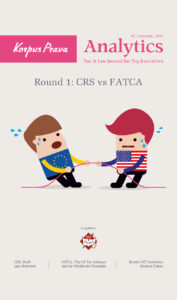
FATCA: The US Tax Octopus and Its Worldwide Tentacles
The US Foreign Account Tax Compliance Act (FATCA) is no longer news. The Act was issued in 2010, and after that it survived several revisions and came into legal force on July 01, 2014. The Act was amended even after it had become legally effective.

Disclosure of Information at the BVI: Truth or Dare
For many years already the British Virgin Islands have been one of the most used offshore jurisdictions for the registration of foreign companies. The BVI have always attracted investors as jurisdiction for holding business. One of the main reasons why the BVI are so popular is the high level [...]
